









The automotive industry is rapidly evolving as manufacturers explore alternatives to traditional petrol and diesel engines. Among these innovations, hydrogen fuel cell technology has gained increasing attention as a potential clean energy solution for the future of mobility.
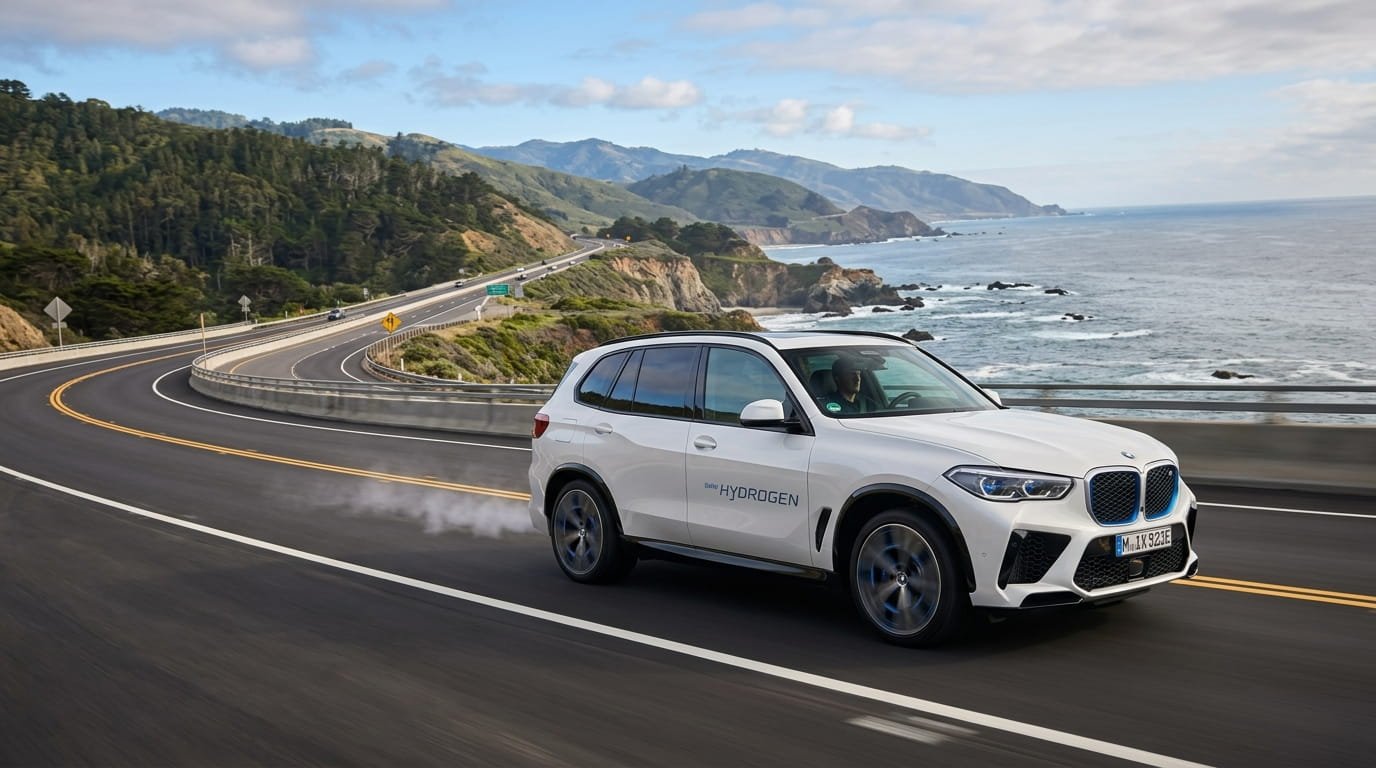
The 2023 BMW iX5 Hydrogen represents one of the most advanced attempts by a major automaker to bring hydrogen power into real-world driving conditions. While many previously considered hydrogen vehicles as experimental “science projects,” BMW aims to prove that this technology is practical, powerful, and ready for real-world use.
This article explores the first driving impressions of the 2023 iX5 Hydrogen and why it may represent more than just a concept vehicle.
What Is the BMW iX5 Hydrogen?
The BMW iX5 Hydrogen is a hydrogen fuel cell version of the popular BMW X5 SUV. Instead of relying solely on a combustion engine or large battery pack, it generates electricity through a chemical reaction between hydrogen and oxygen.
This electricity powers an electric motor, producing zero tailpipe emissions except water vapor. The result is a vehicle that combines electric driving performance with the quick refueling benefits of traditional fuel systems.
Unlike fully battery-electric vehicles, hydrogen cars like the iX5 aim to reduce charging downtime while maintaining long driving range and performance.
Hydrogen Fuel Cell Technology Explained
Hydrogen fuel cell vehicles operate by converting hydrogen gas into electricity inside a fuel cell stack. This process involves:
- Storing compressed hydrogen in tanks
- Feeding hydrogen into the fuel cell
- Mixing it with oxygen from the air
- Producing electricity and water as a byproduct
The electricity is then used to power the electric motor, similar to a battery electric vehicle.
The main advantage of this system is fast refueling, typically taking only a few minutes, compared to longer charging times for battery electric vehicles.
First Drive Impressions
Early driving impressions of the iX5 Hydrogen highlight a smooth, quiet, and refined driving experience. Like most electric vehicles, acceleration is instant and linear, offering responsive performance in urban and highway conditions.
Key first-drive observations include:
- Smooth and silent operation
- Strong acceleration response
- Stable handling despite SUV size
- Comfortable ride quality
- Familiar BMW driving dynamics
The vehicle maintains the premium driving feel expected from BMW while introducing a new energy system.
Performance and Driving Range
One of the most important aspects of hydrogen vehicles is range and refueling speed.
The iX5 Hydrogen offers competitive driving range for a vehicle in its class, along with the ability to refuel in just a few minutes. This addresses one of the biggest concerns associated with battery electric vehicles—long charging times.
While exact range may vary depending on conditions, hydrogen fuel cells are designed to provide consistent performance without significant range loss under normal driving.
Design and Platform
The iX5 Hydrogen is based on the standard BMW X5 platform but includes modifications to accommodate hydrogen tanks and fuel cell systems.
Visually, it retains the premium SUV design language of BMW, with subtle changes distinguishing it from conventional models. The interior remains focused on comfort, technology, and driver-oriented features.
Despite housing advanced hydrogen technology, BMW has managed to preserve cargo space and passenger comfort to a large extent.
Environmental Impact
One of the biggest advantages of hydrogen fuel cell vehicles is their potential environmental benefit. The iX5 Hydrogen produces zero tailpipe emissions, with water vapor being the only byproduct.
However, the overall environmental impact depends on how the hydrogen is produced. If generated using renewable energy sources, hydrogen can be a truly clean fuel. If produced using fossil fuels, the benefits are reduced.
This makes hydrogen part of a broader discussion about sustainable energy infrastructure.
Hydrogen vs Electric Vehicles
The iX5 Hydrogen enters a competitive landscape dominated by battery electric vehicles (BEVs). While BEVs rely on charging infrastructure, hydrogen vehicles depend on fueling stations.
Key differences include:
- Refueling time: Hydrogen is faster
- Infrastructure: EV charging is more widespread
- Range consistency: Hydrogen can offer stable range
- Energy efficiency: EVs are generally more efficient
Hydrogen may not replace electric vehicles but could complement them in specific use cases such as long-distance travel and commercial transport.
Challenges Facing Hydrogen Cars
Despite its promise, hydrogen technology still faces several challenges:
- Limited refueling infrastructure
- High production and storage costs
- Energy conversion inefficiencies
- Dependence on green hydrogen availability
These challenges explain why hydrogen vehicles are still in early stages of adoption.
BMW’s Vision for Hydrogen Mobility
BMW is not positioning hydrogen as a replacement for electric vehicles but rather as an additional technology option. The company is testing real-world feasibility through models like the iX5 Hydrogen to understand where hydrogen fits in the future mobility ecosystem.
This experimental approach helps BMW evaluate performance, consumer acceptance, and infrastructure readiness.
Conclusion
The 2023 BMW iX5 Hydrogen shows that hydrogen fuel cell technology is moving beyond the concept stage and into real-world testing. While challenges remain, the driving experience demonstrates that hydrogen vehicles can offer smooth performance, fast refueling, and zero emissions.
Rather than being just a “science project,” the iX5 Hydrogen represents a serious step toward diversifying clean energy solutions in the automotive industry.
Whether hydrogen becomes a mainstream fuel or a niche solution, the iX5 proves that the future of mobility is no longer limited to a single technology path.


